
Possible Preaching Themes
Possible Scientific Resources
- Costly Discipleship and Self-Denial in Following Christ
Jesus calls disciples to “deny themselves, take up their cross, and follow,” revealing that authentic discipleship entails sacrifice and transformation. - The Tension Between Divine Mission and Human Resistance
Jeremiah and Peter both resist suffering, yet God’s mission prevails beyond human preference. - Transformation of the Mind and Life in Christ (Romans 12)
Christian life involves interior renewal, not conformity to worldly patterns. - Losing Life to Save It: The Paradox of Christian Fulfillment
True life is found not in self-preservation but in self-gift.
- Costly Discipleship and Self-Denial (Self-Sacrifice Science)
- Research on identity fusion and extreme prosocial sacrifice demonstrates how deep identification leads to willingness for self-sacrifice
- Evolutionary psychology studies on altruism and costly cooperation
- Psychological research on delayed gratification and long-term flourishing.
- Resistance and Cognitive Dissonance
- Studies on cognitive dissonance theory (Leon Festinger) explain resistance
to difficult truths. - Neuroscience of threat perception and avoidance behavior.
- Behavioral research on moral decision-making under stress.
- Studies on cognitive dissonance theory (Leon Festinger) explain resistance
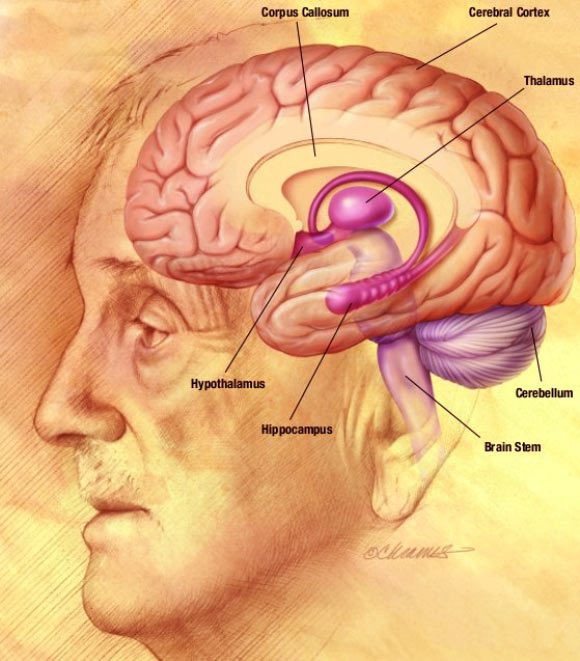
- Transformation of Mind (Neuroplasticity)
- Neuroscience of neuroplasticity and behavioral change
- Studies on habit formation and cognitive restructuring
- Research on mindfulness and moral decision-making pathways
- Paradox of Losing Life (Meaning & Well-being)
- Research shows that a meaning-oriented life correlates with greater wellbeing than a pleasure-oriented life.
- Studies on purpose, sacrifice, and long-term psychological fulfillment.
- Viktor Frankl-inspired research on meaning-making in suffering.
Homily Outline Combining Resources
Homily: Transformation of the Mind and Life in Christ
- In Romans 12:2, St. Paul gives one of the clearest descriptions of Christian conversion: “Do not conform yourselves to this age but be transformed by the renewal of your mind.”
- This is not a superficial adjustment of behavior. It is an interior reordering of perception, desire, judgment, and action. The readings together reveal that discipleship requires more than outward loyalty.
- Jeremiah feels within himself a fire he cannot suppress; furthermore we learn from Peter’s action that God’s way is not the way of mere selfprotection; then Paul calls believers to a renewed mind capable of discerning the will of God.
- The issue, then, is not only what the disciple does, but how the disciple has been inwardly changed.
- Modern neuroscience offers an illuminating parallel.
- Research on neuroplasticity shows that the brain is not fixed; it remains capable of change across the lifespan. Repeated practices, habits, and patterns of attention can strengthen some pathways and weaken others. In that sense, what we repeatedly do and attend to helps shape the kind of person we become
- Studies on habit formation likewise show that repeated actions in stable contexts become increasingly automatic. Human beings often live not by deliberate choice alone, but by ingrained patterns.
- This helps explain why conversion is difficult: old ways of thinking and acting become familiar, efficient, and comfortable, even when they are spiritually harmful.
- Research on cognitive restructuring adds further insight
- Change becomes possible when distorted or unhelpful patterns of thought are identified and reoriented. In psychological language, cognition can be reframed; in Pauline language, the mind can be renewed.
- Yet the Christian claim goes further than neuroscience. Paul is not merely describing mental flexibility; he is speaking of conversion in Christ. The renewed mind is not simply a better-functioning brain, but a life opened to the will of God.
- Christian transformation is therefore not self-engineering alone. It is grace received, cooperated with, and embodied in discipleship.
- The Gospel is so revealing because Peter was thinking according to human logic: preserve life, avoid suffering, resist the cross.
- Jesus exposes this mindset and calls us to another way. The transformed mind is the mind that learns to see with Christ rather than merely with instinct, fear, or social expectation.
- Mindfulness can be helpful but must remain secondary. Studies suggest that disciplined awareness may improve attention to inner states, reduce reactive behavior, and heighten sensitivity to morally relevant cues. Such findings are valuable because they show that attentiveness matters.
- The Gospel asks for more than awareness; it asks for discipleship. The Christian does not simply become more attentive to the self, but more available to God and more responsive to the demands of love.
- The renewal of the mind in Romans 12 is not abstract.
- It takes flesh in concrete practices: prayer, disciplined self-examination, repentance, worship, sacramental life, moral discernment, and habits of charity. Over time, these practices do not merely decorate the Christian life; they reshape it. Just as repeated habits can deepen selfishness, repeated practices of grace can deepen holiness.
- Science tells us that repeated attention and repeated action reshape human patterns. The Gospel reveals the end toward which those patterns must be reshaped: not simply efficiency, calmness, or self-control, but conformity to Christ.
- For contemporary believers, this reading is deeply challenging. Many people conform to age without noticing it: by fear, social pressure, resentment, distraction, consumerism, and the instinct of self-preservation. Paul invites the Church to something far deeper than external religiosity. Paul invites believers to let God re-form the inner life.
- The question for preaching, then, is not merely whether people believe in Christ, but whether their minds, habits, desires, and decisions are being steadily renewed in him.
- The transformed life begins where the old pattern is interrupted, and the grace of God is allowed to teach us a new way to see, judge, and live.
- Romans 12 joins the call of the Gospel: Discipleship means learning to think with Christ, to desire with Christ, and to follow Christ. The mind renewed by grace becomes capable of recognizing that the cross is not failure, but the path by which life is found.
Related Homily Outlines

15th Sunday of the Year A
15th Sunday of the Year ABY CON FOLEY, July 12, 2026 Lectionary 103: Isa 55:10-11 Ps 65:10, 11, 12-13, 14 Rom 8:18-23 Matt...
Feast of the Presentation of the Lord
Feast of the Presentation of the LordBY CON FOLEY, February 02, 2026 Lectionary 524: Mal 3:1-4 Ps 24:7, 8, 9, 10 Heb 2:14-18 Luke 2:22-40 or...

Baptism of the Lord
Baptism of the LordBY CON FOLEY, January 11, 2026 Lectionary 21: Isa 42:1-4, 6-7 Ps 29:1-2, 3-4, 3, 9-10 Acts 10:34-38 Matt...

Dedication of the Lateran Basilica
Dedication of the Lateran Basilica, Year C BY CON FOLEY, November 09, 2025 Lectionary 671: Ezek 47:1-2, 8-9, 12 Ps 46:2-3, 5-6, 8-9 1 Cor...

26th Sunday in Ordinary Time, Year C
26th Sunday in Ordinary Time, Year C – by CON FOLEY, September 28, 2025 Lectionary 138: Amos 6:1a, 4-7 Ps 146:7, 8-9, 9-10 1 Tim 6:11-16...

21st Sunday of the Year C
21st Sunday of the Year C
BY CON FOLEY, August 24, 2025
Lectionary 123:
Isa 66:18-21

8th Sunday of the year C
8th Sunday of the year CBY Con foley, March 2, 2025 Lectionary 84: Sirach 27:4-7 Psalm 92:2-3, 13-14, 15-16 1 Corinthians 12:4-11 Luke...
Feast of the Presentation of the Lord
Feast of the Presentation of the LordBY CON FOLEY, February 02, 2025 Lectionary 524: Mal 3:1-4 Ps 24:7, 8, 9, 10 Heb 2:14-18 Luke 2:22-40 or...
Baptism of the Lord
Baptism of the LordBY CON FOLEY, January 12, 2025 Lectionary 21: Isa 42:1-4, 6-7 Ps 29:1-2, 3-4, 3, 9-10 Acts 10:34-38 Matt...
Feast of the Presentation of the Lord
Feast of the Presentation of the LordBY CON FOLEY, February 02, 2024 Lectionary 524: Mal 3:1-4 Ps 24:7, 8, 9, 10 Heb 2:14-18 Luke 2:22-40 or...
Couldn’t find what you’re looking for?
Try searching with another filter
Preaching with Sciences

Edward Foley, Capuchin
Duns Scotus Professor Emeritus of Spirituality
Professor of Liturgy and Music (retired)
Catholic Theological Union
Vice-Postulator, Cause of Blessed Solanus