
Possible Preaching Themes
Possible Scientific Resources
- Christ’s Redemptive Sacrifice as the Foundation of Christian Life
Paul teaches that the saving work of Christ, his life, death, and resurrection, forms the foundation of Christian faith and ministry. - The Compassion of Jesus in Response to Human Suffering
In the Gospel, Jesus sees the crowds “harassed and helpless,” and his compassion leads directly to mission. - Discipleship as Participation in the Servant Mission of Christ
Jesus sends the disciples to heal, restore, and proclaim the Kingdom.
- Empathy and compassion
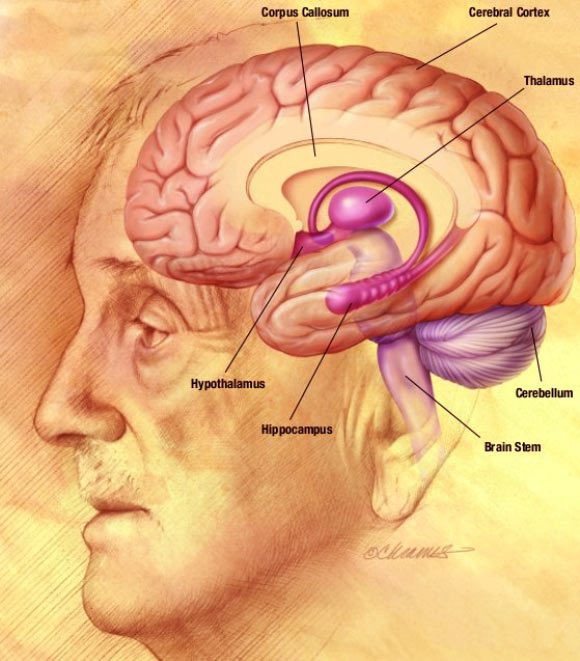
Research in social neuroscience shows that human beings flourish in cooperative communities. Studies demonstrate that strong communal bonds increase psychological resilience and social well-being.- A short video clip from theGreater Good Science Center research on compassion and social cohesion
- A longer article on social connection and compassion as “important predictors of health and well-being
- A longer scientific articleon the neuroscience of empathy and compassion, and their effects on prosocial behavior
- A scientific review of compassion neuroscience literaturedescribing neural mechanisms of empathy and moral concern.
- The psychology of self-sacrifice
Psychologists regularly study the nature of self-sacrifice. They demonstrate that this behavior can be acted out for a variety of affirming and problematic reasons.- A short article that suggests that self-sacrifice without boundaries can be harmful
- This is a 12-minute video by a psychologist who explores the nature of self-sacrifice
- Some theorists believe that people lay down their lives for each other as a result of what is called “identity fusion”
- Others argue that self-sacrifice is a form of maladaption that begins in childhood
Homily Outline Combining Resources
Homily: The Compassion of Jesus central to Mission
- The Gospel of Matthew presents a striking image: Jesus looks upon the crowds and sees that they are “troubled and abandoned, like sheep without a shepherd” (Mt 9:36).
- Yet this moment does not stand in isolation. Throughout the Gospels,
Jesus repeatedly encounters human suffering and responds with concrete acts of compassion. He touches the leper and restores his dignity (Mt 8:3), heals the sick and the paralyzed (Mt 9:1–7), restores
sight to the blind (Mt 9:27–31), feeds the hungry (Mt 14:13–21), and even raises the dead (Jn 11). - His compassion is never abstract; it is embodied, active, and transformative.
- Yet this moment does not stand in isolation. Throughout the Gospels,
- This pattern reveals a profound theological truth: compassion is not merely an emotion but central to mission in his name.
- Jesus does not simply feel pity; he acts. And more importantly, he
draws others into this same movement. - After seeing the suffering of the crowds, he calls his disciples, forms
them, and sends them out to heal, to restore, and to proclaim the Kingdom of God. Mission, therefore, emerges directly from the encounter with human suffering.
- Jesus does not simply feel pity; he acts. And more importantly, he
- Modern scientific research offers a deeper understanding of this dynamic.
- Neuroscientific studies show that compassion activates neural systems associated with caregiving and prosocial action, enabling individuals to respond to others’ suffering in meaningful ways.
- Similarly, research demonstrates that compassion strengthens social
bonds and contributes to psychological well-being. These findings suggest that compassion is not incidental but foundational to human relational life.
- However, the Gospel calls us beyond compassion alone.
- At the heart of Christian faith is not only the compassionate ministry
of Jesus but his total self-giving in his life, death, and resurrection. - As St. Paul reminds us, “while we were still sinners Christ died for us”
(Rom 5:8). This is the ultimate expression of self-sacrifice. - Christ does not merely respond to suffering; he enters into it fully and offers himself for the salvation of others.
- At the heart of Christian faith is not only the compassionate ministry
- Scientific research on self-sacrifice provides a complementary perspective.
- Studies on identity fusion show that individuals who experience deep relational bonds are willing to make extreme sacrifices for others.
- Evolutionary and psychological research further indicates that self-
sacrificial behavior can emerge from profound identification with a community or cause. - At the same time, scholars caution that self-sacrifice without proper grounding can become harmful or maladaptive.
- Within the Christian vision, however, self-sacrifice is never to arbitrary or destructive; it is to be ordered toward love, redemption, and life.
- The self-giving of Christ reveals the deepest meaning of sacrifice: not
loss for its own sake, but the restoration of communion. His life, death, and resurrection constitute the true foundation of Christian ministry. - Therefore, when Jesus sends the disciples on mission to heal the sick,
raise the dead, cleanse lepers, and cast out demons, he is inviting them to participate not only in acts of compassion but also in a way of life shaped by self-giving love. Discipleship becomes a participation in
Christ’s own mission, grounded in his redemptive work.
- The self-giving of Christ reveals the deepest meaning of sacrifice: not
- For the contemporary believer, this Gospel presents both a challenge and an invitation.
- It calls us first to recognize the suffering that surrounds us. It calls us
to feel to allow our hearts to be moved with compassion. But it does not stop there. It calls us to act, and ultimately, to give of ourselves in service to others. - In this way, the mission of the Church continues: rooted in Christ,
animated by compassion, and realized in self-giving love.
- It calls us first to recognize the suffering that surrounds us. It calls us
Related Homily Outlines

15th Sunday of the Year A
15th Sunday of the Year ABY CON FOLEY, July 12, 2026 Lectionary 103: Isa 55:10-11 Ps 65:10, 11, 12-13, 14 Rom 8:18-23 Matt...
Feast of the Presentation of the Lord
Feast of the Presentation of the LordBY CON FOLEY, February 02, 2026 Lectionary 524: Mal 3:1-4 Ps 24:7, 8, 9, 10 Heb 2:14-18 Luke 2:22-40 or...

Baptism of the Lord
Baptism of the LordBY CON FOLEY, January 11, 2026 Lectionary 21: Isa 42:1-4, 6-7 Ps 29:1-2, 3-4, 3, 9-10 Acts 10:34-38 Matt...

Dedication of the Lateran Basilica
Dedication of the Lateran Basilica, Year C BY CON FOLEY, November 09, 2025 Lectionary 671: Ezek 47:1-2, 8-9, 12 Ps 46:2-3, 5-6, 8-9 1 Cor...

26th Sunday in Ordinary Time, Year C
26th Sunday in Ordinary Time, Year C – by CON FOLEY, September 28, 2025 Lectionary 138: Amos 6:1a, 4-7 Ps 146:7, 8-9, 9-10 1 Tim 6:11-16...

21st Sunday of the Year C
21st Sunday of the Year C
BY CON FOLEY, August 24, 2025
Lectionary 123:
Isa 66:18-21

8th Sunday of the year C
8th Sunday of the year CBY Con foley, March 2, 2025 Lectionary 84: Sirach 27:4-7 Psalm 92:2-3, 13-14, 15-16 1 Corinthians 12:4-11 Luke...
Feast of the Presentation of the Lord
Feast of the Presentation of the LordBY CON FOLEY, February 02, 2025 Lectionary 524: Mal 3:1-4 Ps 24:7, 8, 9, 10 Heb 2:14-18 Luke 2:22-40 or...
Baptism of the Lord
Baptism of the LordBY CON FOLEY, January 12, 2025 Lectionary 21: Isa 42:1-4, 6-7 Ps 29:1-2, 3-4, 3, 9-10 Acts 10:34-38 Matt...
Feast of the Presentation of the Lord
Feast of the Presentation of the LordBY CON FOLEY, February 02, 2024 Lectionary 524: Mal 3:1-4 Ps 24:7, 8, 9, 10 Heb 2:14-18 Luke 2:22-40 or...
Couldn’t find what you’re looking for?
Try searching with another filter

Preaching with Sciences

Edward Foley, Capuchin
Duns Scotus Professor Emeritus of Spirituality
Professor of Liturgy and Music (retired)
Catholic Theological Union
Vice-Postulator, Cause of Blessed Solanus